
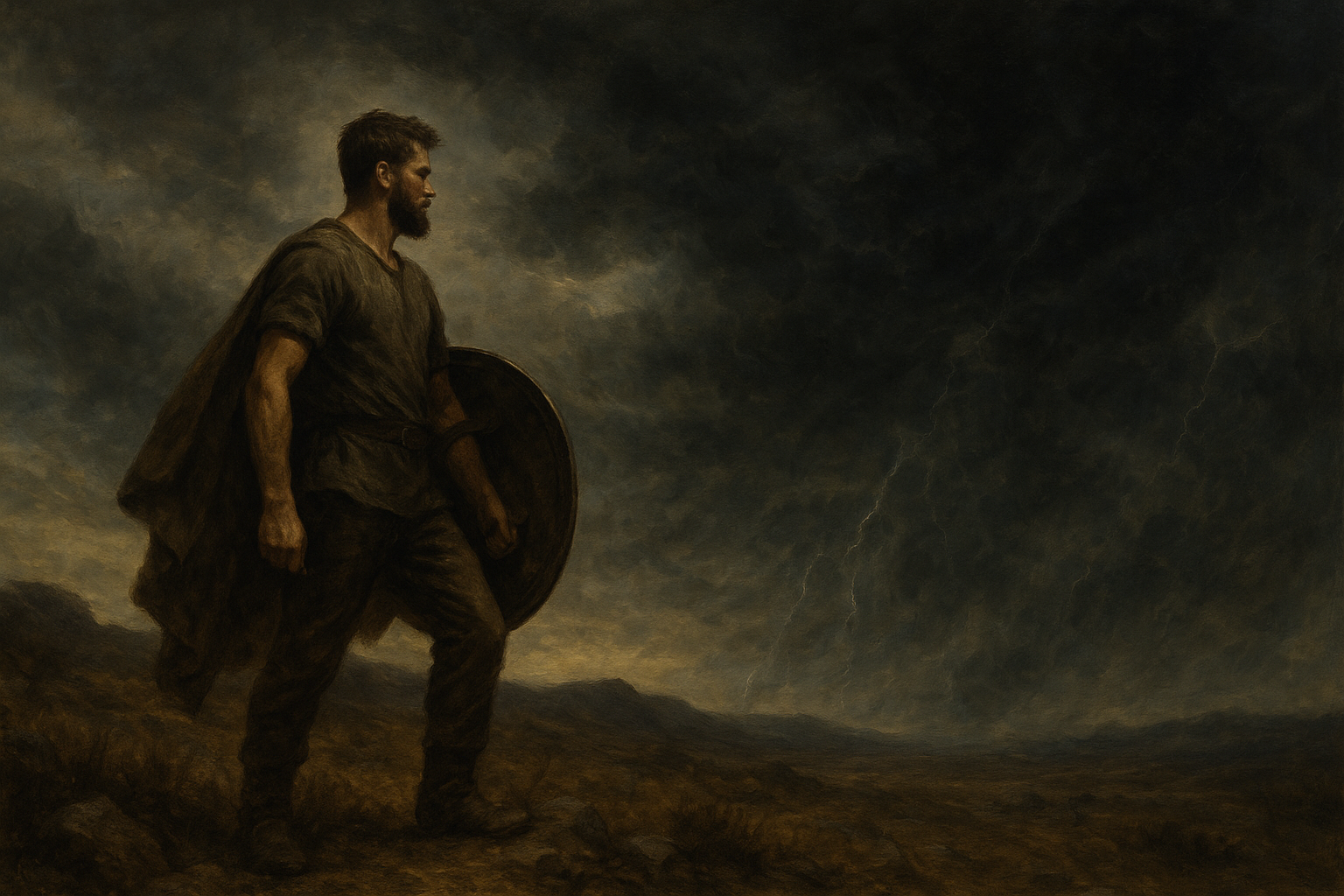
We are told, again and again, that men are on their way out. The cultural story is that women have taken over the “traditional” roles of men — providers, protectors, leaders — and that male strength is no longer required. The message is not just that men are unnecessary, but that those who cling to traditional masculinity are insecure, terrified of being made irrelevant.
This is propaganda — not truth.
Every civilization in human history has depended on the distinct virtues of men, expressed through what we call traditional masculinity: courage, physical strength, risk-taking, stoic endurance, and the instinct to protect. These are not disposable qualities. They are civilizational anchors. Without them, societies collapse into chaos or tyranny.
The “men are obsolete” narrative ignores a simple fact: men overwhelmingly perform the jobs that keep civilization alive. Who digs the trenches, hauls the steel, fights the fires, polices the streets, maintains the power lines, drives the rigs, and dies on the battlefield? It is men, nearly always men. This is not cultural accident, but natural design. Masculinity produces the drive to shoulder the burden of dangerous, grueling, thankless work.
Consider the military. No nation has ever survived without warriors willing to fight and, if necessary, to die. Feminists scoff that “machines fight wars now.” But machines do not bleed, march, or patrol — men do. The death tolls of the last century remind us that national survival rests on masculine courage.
Consider families. Decades of sociological research show that children raised without fathers are far more likely to fall into crime, poverty, substance abuse, and despair. The masculine presence stabilizes, disciplines, and inspires. A father’s strength, both physical and moral, is a safeguard against the disintegration of the home. Remove fathers, and you produce not liberation, but collapse.
Consider risk. Men are the builders, the entrepreneurs, the pioneers. Masculine energy pushes against the frontier, whether geographical, technological, or economic. Civilization advances because men take the risks that others will not. From the wilderness settlements of early America to the Silicon Valley startup, this spirit is masculine at its root.
The cultural left insists that men who affirm traditional masculinity do so out of insecurity, clinging to a past that is vanishing. But that is projection. They mistake duty for fear, service for selfishness, courage for fragility. Men do not defend masculinity to protect themselves. They defend it because society cannot survive without it.
The truth is that masculinity is not threatened. Civilization is threatened without masculinity. That is the point.
Our enemies want to neuter men because strong men are the single greatest defense against tyranny. A society without masculine virtue is easily manipulated, easily ruled, easily destroyed. A society with men who are confident in their traditional role — providers, protectors, builders, leaders — is unbreakable.
History is clear: whenever a culture despises its men, it begins to rot. Whenever a culture honors its men, it endures. If America abandons traditional masculinity, it will not gain equality. It will gain ruin.
The fight, then, is not about whether men will be “relevant.” Men will always be relevant. The question is whether our society will honor them in their rightful role — or cripple itself by pretending otherwise.
Traditional masculinity is not a relic. It is a necessity. It is the fire in the hearth, the wall around the city, the backbone of the Republic. Without it, we lose everything.
References
U.S. Bureau of Labor Statistics, “Labor Force Statistics by Occupation.”
Pew Research Center, “The Role of Fathers in Child Development.”
U.S. Department of Defense, “Active Duty Demographics.”
McLanahan, Sara, and Gary Sandefur, Growing Up with a Single Parent: What Hurts, What Helps. Harvard University Press, 1994.
Wilcox, W. Bradford, “The Distinct, Positive Impact of a Married Father on His Children,” Institute for Family Studies.
Hanson, Victor Davis, Carnage and Culture: Landmark Battles in the Rise of Western Power.